Growth is usually a good problem to have. But as your manufacturing business becomes larger or more complex, the systems and processes that once worked well can start to feel stretched.
That doesn’t necessarily mean there is anything wrong with Sage 200. In many cases, the software may still be doing exactly what it was originally implemented to do. The challenge is that your business may now be asking more of it.
More locations, greater production complexity, additional systems, larger volumes of data and increasing reporting requirements can all change what you need from your business management software.
So, how can you tell whether you simply need to optimise your existing Sage 200 setup or whether it could be time to consider the next stage of your ERP journey?

Outgrowing Sage 200 isn’t just about business size
There isn’t a particular turnover, employee count or number of transactions that suddenly means a business has “outgrown” Sage 200.
For manufacturers, complexity is often more important than size.
A business operating from one site with relatively straightforward processes could have very different requirements from a manufacturer managing several locations, complex production schedules, multiple entities and an increasingly connected supply chain.
The important question is whether your current system still gives your teams the visibility, control and efficiency they need as the business develops.
If people are increasingly relying on spreadsheets, manual workarounds or separate systems to fill the gaps, those can be useful signs that it is worth reviewing your current setup.
6 signs your manufacturing business may be outgrowing Sage 200
Reporting still requires too much manual work

Sage 200 already offers a range of reporting options, including flexible nominal structures, Excel reporting and Power BI integration. But as your business becomes more complex, the question is whether those tools are still giving you the insight you need without excessive manual intervention.
If your team is regularly exporting data, combining reports from different parts of the business or spending significant time preparing information before it can be used, that could be a sign that your reporting requirements have moved beyond your current setup.
More processes are happening outside your core system
Using additional systems alongside Sage 200 isn’t necessarily a problem. Sage 200 can connect with a range of applications and services.
The warning sign comes when your team increasingly relies on manual workarounds, duplicate data entry or complicated integrations simply to keep information moving between systems. If maintaining those connections is becoming a job in itself, it may be worth considering whether a broader ERP platform could simplify the overall environment.
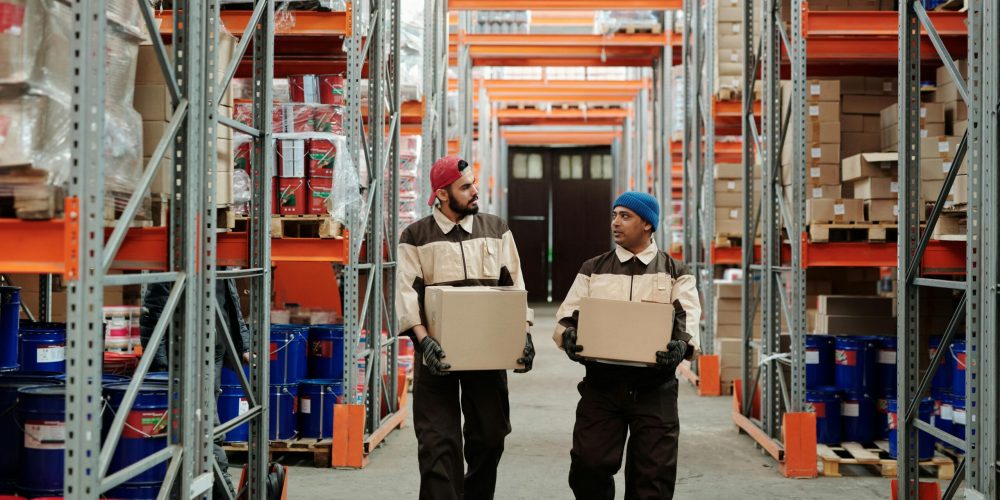
Inventory and production are becoming harder to coordinate
As manufacturers grow, operations often become more complex. More product lines, raw materials, warehouses, suppliers and production stages can all make it harder to keep a clear view of what is happening across the business.
Stock visibility becomes harder
Teams may spend more time checking stock levels, availability and movement across the business, making it harder to stay confident in day-to-day decisions.
Production becomes more difficult to coordinate
As production stages and workflows increase, it can take more effort to keep operations aligned and ensure the right information reaches the right teams.
Information becomes more fragmented
When data sits across different systems or departments, teams may need to manually bring information together before they can get a clear picture.
Decision-making becomes slower
Without joined-up visibility across inventory, purchasing, production and finance, it can become harder to make timely decisions based on the same information.
As complexity increases, manufacturers often need better visibility across inventory, purchasing, production and finance to keep operations connected and decisions informed.
Your business structure is becoming significantly more complex
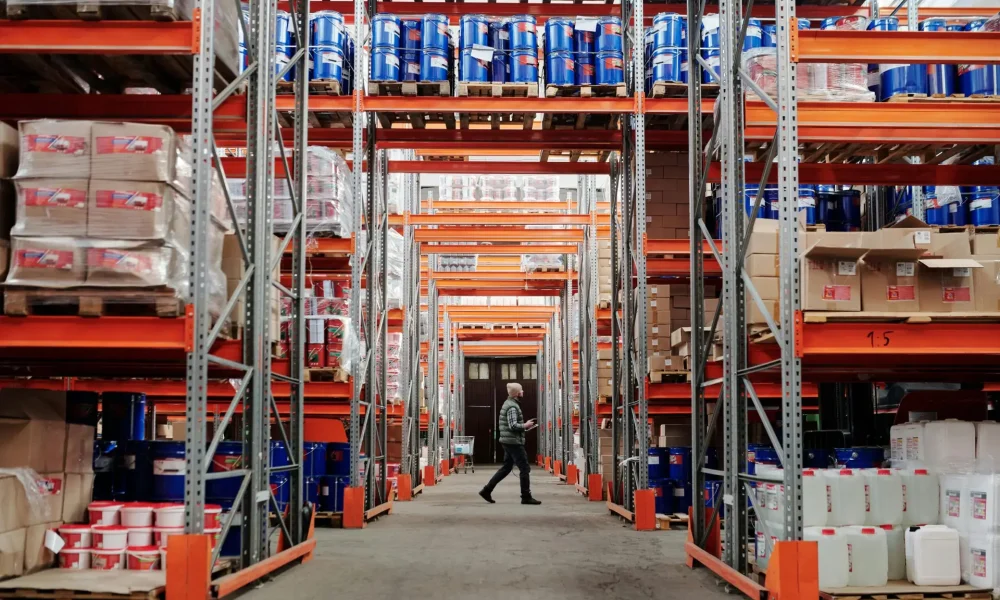
Sage 200 can already support multiple companies and stock locations. But as manufacturers expand across more entities, sites, departments, currencies or even countries, managing the overall structure can become more demanding.
If consolidation, reporting and maintaining visibility across the organisation are becoming increasingly difficult, it may be worth considering whether you need a platform designed around more complex multi-company and multi-site operations.
Getting a complete view of the business is becoming difficult
A growing manufacturing business often adds new software over time. You might have separate tools for CRM, warehouse management, purchasing, production, expenses or reporting.
That isn’t always a problem. But if those systems don’t integrate effectively, teams can end up re-entering data, checking information in several places or relying on manual updates between platforms.
When this starts happening regularly, it can become harder to maintain a single, reliable view of the business.
A more connected ERP environment can help reduce those gaps by bringing more of your operational and financial information together.
You need more automation across the business
Growth can expose processes that were manageable when volumes were lower.
Purchase approvals, data entry, reconciliations, stock updates and reporting may all require more manual intervention as transaction volumes increase.
If your team is spending more time on repetitive tasks simply to keep day-to-day processes moving, that can be a sign that your current system and workflows need reviewing.
Automation won’t remove every manual task, but it can help reduce repetitive work and give teams more time to focus on exceptions, planning and decision-making.

Signs it may be time to review your setup
If you’re experiencing any of the issues below, it could be a sign that your Sage 200 setup isn’t fully supporting your manufacturing operations. Reviewing your configuration can help you improve accuracy, save time and get more value from the system.
Manual workarounds
Inaccurate stock or costing
Limited visibility
Growing complexity
Does this mean Sage 200 is no longer right for your business?
Not necessarily.
Experiencing one or two of these challenges doesn’t automatically mean you need to replace Sage 200. In some cases, reviewing your existing setup, improving integrations, introducing additional modules or changing internal processes could be enough to remove the pressure points.
The more important question is whether those challenges are becoming frequent, connected and difficult to manage.
If reporting, production, inventory, integrations and multi-site operations are all becoming more complex at the same time, it could be worth reviewing whether your current setup still matches the way your business now operates.
A good starting point is to identify where your teams are spending unnecessary time, where visibility is limited and which processes increasingly depend on manual workarounds.
Could Sage X3 be the next step?
If your manufacturing requirements are becoming more complex across finance, production, inventory, supply chain and multiple sites, it may be worth exploring whether a broader ERP platform such as Sage X3 could be a better fit.
The right next step is to review where your current setup is creating friction and whether Sage 200 can still support the way your business operates today.
We’re here to help you stay one step ahead — get in touch with our experts today!
While UK manufacturing faces a challenging combination of costs, geopolitical uncertainty and tight margins, the future isn’t as doom and gloom as it may seem at first.
Positive output and domestic demand demonstrate the sector’s continued resilience, while the growing adoption of modern technology, automation and AI presents an opportunity to tackle the pressures manufacturers are facing.
Our Sage X3 experts are here to talk you through how the platform can give you greater visibility across your finance, operations and supply chains, creating the foundation needed to adapt and scale with confidence.
Please get in touch by emailing enquiries@solutionscloud.uk or calling us at 0115 840 5075.
The manufacturers that turn today’s cost pressures into an opportunity for digital transformation will be best positioned for the future.