UK manufacturers are operating in a challenging environment of rising energy, labour, and operating costs, with geopolitical uncertainty overshadowing prospects.
Yet the industry has clearly shown resilience to these pressures, with output and domestic demand remaining positive despite concerns that economic activity would deteriorate significantly this year.
Manufacturing businesses today are being pushed to rethink how they operate, stay ahead of competitors and most importantly, prepare for future challenges. As a result, smart technology, automation and AI are being seen less as an optional “nice to have” and more as essential strategic investments.
It’s crucial to ask yourself: What’s the cost of not investing?
While companies can’t control energy prices or geopolitical events, they can control how efficiently they operate and how quickly they can respond to change with the tools they have at hand.

Read on to find out about the key challenges manufacturers face, what the current landscape looks like, and how modern technology is paving a hopeful path forward.
Elevated manufacturing costs are putting margins under pressure
UK manufactures are facing some of the highest industrial costs globally, with input costs continuing to rise faster than many businesses can pass them on to customers.
This could have significant consequences, such as:
Reduced margins as businesses absorb more of the increase rather than passing it entirely to customers.
Weaker cash positions, limiting the money available for growth and investment.
Higher prices, potentially affecting customer demand and competitive positions.
Greater pressure on productivity, as businesses look for ways to produce more without continually increasing headcount.
And these issues aren’t disappearing overnight. So, what’s the solution?
The manufacturing industry has once again proven its resilience and adaptability in the face of adversity
It’s easy to look at rising costs and geopolitical uncertainty and assume the outlook for UK manufacturing is one of doom and gloom.
Yet, the latest figures from The Manfacturers’ Organisation suggest otherwise.
Output has increased from +21% to +26%, while total orders remain positive at +18%. The sector therefore has continued to grow despite considerable disruption across global supply chains.
There are, however, some reasons for caution. Export orders have fallen from +18% to +8%, potentially reflecting the lasting impact of tariffs and wider geopolitical events.
Even so, the overall picture is of an industry adapting and thinking proactively, not of giving in.
According to PWC, nearly two-thirds of manufacturers believe the opportunities in 2026 outweigh the risks, demonstrating the hope many hold for a more stable future. Meanwhile, The Manufacturers’ Organisation forecasts output performance to reach +38%, significantly above the current +26%.
While unfortunately the employment picture tells a different story, with a forecast to decline by 2.1% and increases such as the National Living Wage making it increasingly difficult to increase headcount, there is a clear solution.
Manufacturers are turning to automation and modern technology to improve capacity and productivity in response to higher labour and operating costs. Investing in modern technology shouldn’t simply be seen as another expense; it’s a smart growth strategy.
Modernisation, trusted AI and automation are providing a light at the end of the tunnel
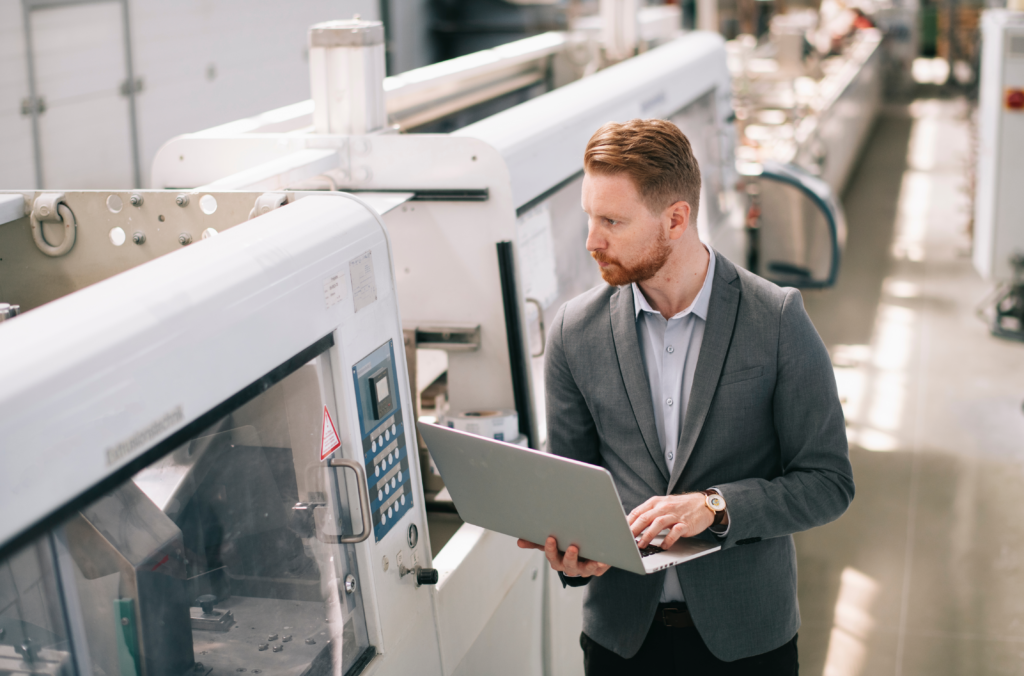
Disconnected systems, siloed information and manual processes make it difficult to get a complete picture of what is happening across finance, operations, inventory and supply chains.
For manufacturers, investing in technology isn’t simply about replacing manual processes; it’s about creating capacity to do more with the resources you already have.
From automation reducing repetitive work to better data visibility and real-time insights helping identify issues before they become costly problems, you can produce more efficiently, prevent excess inventory and make smarter decisions.
Powerful all-round ERP solutions like Sage X3 bring your various processes together, moving towards a more connected view of the business with the product built at the centre. Increasingly, that visibility is being enhanced by AI.
Does Sage X3 have AI?
One of the biggest advantages of AI within an ERP environment is its ability to make business information easier to access and act upon.
The Sales Intelligence Agent can provide instant answers to critical questions, such as:
- How many orders need to be delivered in the next week?
- What is the value of all open orders?
- What was our delivery performance last week?
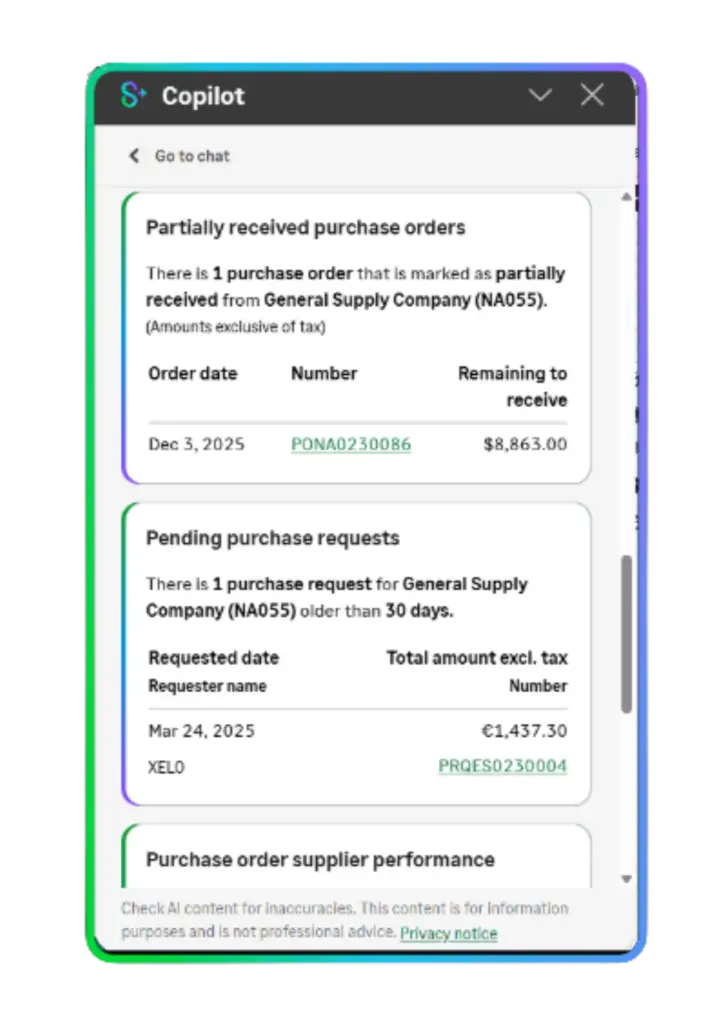
Instead of spending time searching through reports and systems, manufacturers can quickly understand what is happening now and what needs attention next.
The Operational Intelligence Agent provides a similar view across operational activity, helping users identify information such as overdue work orders and purchase requests. Bringing these sales and operational insights together with Sage Copilot can help you make faster, more informed decisions that help drive your business forward and boost your cash flow.
The benefits aren’t limited to visibility, either. AI-powered Accounts Payable (AP) automation can improve accuracy, reduce manual processing and free up employees to spend more time on higher-value work.
PWC’s report that 60% of manufacturers see skills as a major barrier to AI and automation adoption doesn’t come as a surprise; it can understandably be daunting to know where to start when you’re new to using AI and unsure about its reliability.
That’s where we come in; we’re here to guide you through using the various AI-driven tools that sit securely within Sage X3 until you feel confident in how they can safely address your needs.
We’re here to help you stay one step ahead — get in touch with our experts today!
While UK manufacturing faces a challenging combination of costs, geopolitical uncertainty and tight margins, the future isn’t as doom and gloom as it may seem at first.
Positive output and domestic demand demonstrate the sector’s continued resilience, while the growing adoption of modern technology, automation and AI presents an opportunity to tackle the pressures manufacturers are facing.
Our Sage X3 experts are here to talk you through how the platform can give you greater visibility across your finance, operations and supply chains, creating the foundation needed to adapt and scale with confidence.

Please get in touch by emailing enquiries@solutionscloud.uk or calling us at 0115 840 5075.
The manufacturers that turn today’s cost pressures into an opportunity for digital transformation will be best positioned for the future.